
Innovation
For decades, our specialists have advanced the science, technology, and practice of veterinary orthopedics, sports medicine, and minimally invasive diagnosis and treatment.
Clinical Research
Our specialists have secured and managed more than $1 million in veterinary orthopedic research funding and directed studies from design through outcome evaluation.

Research Leadership & Partnerships
- Research funding and direction: More than $1 million in veterinary orthopedic grants and sponsored research secured and managed across laboratory, clinical, and outcomes studies, with responsibility spanning study design through outcome evaluation.
- Nonprofit and industry research support: Support spanned canine-health organizations and companies working in therapeutics, surgical technologies, and regenerative medicine, including the AKC Canine Health Foundation, Nutramax, RTI Surgical, and Companion/EmCyte.
- Academic and clinical collaboration: Collaborators included Cornell University, Johns Hopkins University, Auburn University, Kansas State University, the University of Wisconsin–Madison, the University of Missouri, the University of Florida, Colorado State University, Virginia Tech, the University of Tennessee, the University of Maryland, and other academic and clinical centers.
- Study designs: Laboratory and biomechanical investigations; prospective clinical studies, including randomized, double-blinded, and multicenter trials; retrospective cohorts; diagnostic-accuracy studies; survey research; and longitudinal outcomes studies.
Cartilage Repair, Arthritis & Joint Health
- Cartilage repair methods: Research included biological joint resurfacing, collagen scaffolds seeded with cartilage cells, arthroscopic scaffold implantation, and microscopic evaluation of radiofrequency effects in partial-thickness cartilage defects.
- Cartilage healing and joint response: Studies used microscopic tissue analysis, biochemical testing, and clinical measures to track cartilage-matrix production and repair-tissue composition over time at the defect, in surrounding cartilage, and elsewhere in the joint.
- Osteoarthritis, joint inflammation, and biomarkers: Studies examined naturally occurring canine osteoarthritis and experimentally induced synovitis, including joint-fluid properties and biomarkers of cartilage and bone turnover measured in serum and joint fluid.
- Joint-modifying treatments: Controlled and multicenter studies evaluated oral and injectable approaches, including hyaluronan, glucosamine/chondroitin formulations and other combination joint supplements, fatty-acid formulations, and other joint-directed agents, using lameness, imaging, joint-fluid and serum measures, and owner-reported pain.
Regenerative Treatments for Joints, Tendons & Ligaments
- Preparation and quality: Prospective studies compared canine platelet-rich plasma systems and characterized feline platelet-rich plasma; related development and validation work addressed equine platelet-rich plasma, canine bone marrow aspirate concentrate, and adipose-derived cellular preparations. Cell-count analyses documented substantial differences in platelet concentration and cellular composition across canine platelet-rich plasma systems.
- Osteoarthritis and joint restoration: Clinical research in elbow osteoarthritis and other joint disease evaluated approaches including platelet-rich plasma, bone marrow aspirate concentrate, adipose-derived cellular preparations using a patient’s own or donor cells, interleukin-1 receptor antagonist protein, collagen bioscaffolds, and other injectable joint-restoration materials.
- Tendon treatment research: Retrospective clinical cohorts evaluated adipose-derived cells or bone marrow aspirate concentrate, each combined with platelet-rich plasma, for supraspinatus tendinopathy. Serial musculoskeletal ultrasound tracked structural response; the adipose-cell study also used objective gait analysis.
- Ligament and sports-injury research: Clinical research evaluated bone marrow- or adipose-derived cells combined with platelet-rich plasma for early partial cranial cruciate ligament tears, with outcomes assessed through repeat arthroscopy, objective gait analysis, clinical examination, and owner reports. Related research addressed caudal cruciate and carpal injuries in sporting and working dogs.
Diagnosing Orthopedic & Sports Injuries
- Diagnostic methods and accuracy: Studies compared musculoskeletal ultrasound and magnetic resonance imaging (MRI) with arthroscopy in difficult shoulder cases, compared ultrasound with surgery in clinically stable knees, and evaluated joint anesthetic blocks for locating the source of lameness.
- Shoulder and elbow disorders: Research defined clinical and imaging patterns across 327 dogs with supraspinatus tendinopathy and examined less common conditions including adhesive capsulitis, or frozen shoulder. Elbow research distinguished traumatic medial coronoid-process fractures from developmental disease and evaluated arthroscopic management.
- Muscle, tendon, and nerve injuries: Musculoskeletal-ultrasound studies classified iliopsoas and Achilles injuries by location, severity, and acute or chronic pattern; evaluated carpal injuries; and documented findings involving the proximal sciatic nerve and deep gluteal muscles. Earlier equine research combined clinical examination and tissue analysis to link nerve lesions with denervation-related muscle atrophy.
- Complex and concurrent injuries: Large clinical cohorts found that supraspinatus and iliopsoas injuries frequently coexisted with other orthopedic disease. Studies therefore examined history, gait, physical findings, and imaging together rather than treating a single abnormality as the complete explanation for lameness.
Orthopedic Surgery, Implants & Reconstruction
- Fracture fixation and joint preservation: Foundational biomechanical studies compared fracture-repair constructs and interlocking-nail systems, examined how radiofrequency technique affected joint-capsule healing, and evaluated hip-joint modification intended to prevent dysplasia.
- Knee-surgery planning and bone healing: Studies quantified tibial plateau anatomy across 3,922 knees and factors associated with implant removal after 747 tibial plateau leveling osteotomy (TPLO) procedures. Laboratory and clinical research evaluated bioceramic and matrix materials, growth-factor combinations, and low-intensity pulsed ultrasound for bone healing.
- Elbow and hip reconstruction: Prospective multicenter research followed 103 initial cases of partial elbow joint replacement, tracking function and complications. Hip studies evaluated long-term outcomes after hip-toggle stabilization and identified case factors guiding cemented versus cementless femoral-component selection in modular total hip replacement.
- Shoulder stabilization: Multicenter clinical research evaluated prosthetic-ligament reconstruction for medial shoulder instability across all grades, tracking complications and function in 39 dogs for six to 68 months.
- Joint access and minimally invasive surgery: Foundational equine anatomy research showed that variable communication between the elbow joint and a nearby bursa could make a caudal approach to joint aspiration or injection unreliable. Other research developed and evaluated arthroscopic and endoscopically assisted approaches for joint assessment, cartilage treatment, and ligament release, from early small-joint work to later comparisons of needle arthroscopy and standard arthroscopy for shoulder, elbow, and knee conditions.
Measuring Recovery, Rehabilitation & Return to Activity
- Muscle function, movement, and loading: Foundational laboratory research examined slow-twitch muscle fatigue, cellular energy depletion, and metabolism under different contraction and blood-flow conditions. Canine studies quantified breed-related walking and trotting patterns and showed that marker placement can materially alter calculated knee motion—evidence that movement measures must account for both the dog and the method. Related equine biomechanical research showed that carpal hyperextension disproportionately increased strain in the superficial digital flexor tendon, helping define a potential injury mechanism.
- Objective measures of recovery: Research evaluated and validated weight-distribution platforms, pressure-sensitive walkways, stance analysis, force-platform testing, and joint range-of-motion measurement for detecting lameness and tracking function. Studies used these tools alongside clinical examination, imaging, and owner-reported outcomes.
- Physical-treatment research: Clinical studies evaluated localized vibration and electronic massage for pain and mobility in dogs with hip dysplasia or osteoarthritis; shock-wave therapy for elbow osteoarthritis; and heat- and magnetic-field-based approaches for osteoarthritis.
- Braces and limb prostheses: A small retrospective study used pressure-sensitive gait analysis to evaluate custom knee braces for cranial cruciate ligament insufficiency. Separate clinical work examined external limb prostheses and self-suspension systems, including patient selection, complications, device tolerance, mobility, and daily function.
- Rehabilitation from surgery to activity: Published clinical guidance addressed rehabilitation after elbow surgery and for shoulder disorders, massage, athletic-patient conditioning, and treatment safety, from postoperative protection and restored mobility through strengthening, retraining, and preparation for daily activity, work, or sport.
- Return to sport and training conditions: Outcomes research followed agility dogs after tibial plateau leveling osteotomy (TPLO) for cranial cruciate ligament tears, including return to competition. Survey research evaluated associations among training and competition surfaces, reported injuries, missed-performance days, and perceived performance.
Technology Development
Our specialists have served as clinical-development partners for veterinary orthopedic technologies, contributing to product design, validation, and clinical implementation.

Minimally Invasive Imaging & Instrumentation
- Canine arthroscopy: Established one of the profession’s early canine arthroscopy programs and developed, documented, and implemented minimally invasive techniques for joint assessment and treatment.
- Veterinary-specific instrumentation: Developed complete canine arthroscopy systems with graspers, meniscal punches, cannulas, osteotomes, scissors, suture passers, and other instruments sized and configured for veterinary procedures.
- Needle-scope and integrated imaging: Adapted, validated, and clinically tested portable micro-arthroscopy combining needle-scope visualization, musculoskeletal ultrasound, and tablet-based imaging for minimally invasive joint and soft-tissue care.
- Diagnostic and procedural applications: Developed and evaluated musculoskeletal-ultrasound applications for tendon, ligament, muscle, and nerve disorders; compared and combined ultrasound, magnetic resonance imaging (MRI), needle-scope evaluation, and conventional arthroscopy in difficult orthopedic cases; and adapted image-guided and endoscopically assisted approaches for specialized procedures across species.
Orthopedic Implants & Repair Systems
- Canine fixation systems: Developed low-profile, limited-contact, locking, pre-contoured tibial plateau leveling osteotomy (TPLO) plates in multiple canine sizes and configurations and an anatomically contoured locking plate for pancarpal arthrodesis.
- Tendon and ligament repair: Developed a braided-fiber construct with paired straight needles for canine Achilles-tendon repair and clinically evaluated prosthetic-ligament stabilization for medial shoulder instability through multicenter research.
- Joint reconstruction: Clinically evaluated modular hip components, hip-toggle stabilization, and the initial multicenter use of partial elbow replacement, including selection criteria, function, complications, and longer-term outcomes.
- Mechanical performance & clinical outcomes: Compared orthopedic fixation constructs in foundational biomechanical studies and analyzed large clinical datasets examining canine knee geometry, implant-removal risk, return to activity, complications, and functional outcomes.
Regenerative, Orthobiologic & Joint-Restoration Technologies
- Platelet-rich plasma systems: Characterized canine preparation systems and documented substantial differences in platelet concentration and cellular composition among systems intended for the same purpose.
- Species-specific processing: Developed and validated a platelet-rich plasma system for feline patients and undertook related development and validation work for equine patients, accounting for species differences rather than assuming that canine or human preparation methods would transfer unchanged.
- Marrow- and fat-derived technologies: Validated a canine bone-marrow aspirate concentrate system with biomedical engineers at the University of Maryland and separately developed and validated canine-specific processing for adipose-derived cellular preparations.
- Cartilage-tissue engineering: Characterized cartilage cells within porous collagen scaffolds over time and advanced cell-seeded materials from laboratory analysis to implantation in extensive cartilage defects.
- Engineered bioscaffolds: Developed collagen-based materials and evaluated gelatin-based bioscaffolds for intra-articular joint restoration and other orthopedic applications.
- Joint- and bone-directed materials: Adapted, tested, and validated canine hyaluronic-acid technology; developed or clinically evaluated injectable joint matrices and bone-graft substitutes; and tested growth-factor combinations for tendon, ligament, joint, and bone applications.
Functional Measurement & Recovery Technologies
- Objective loading and gait analysis: Evaluated and validated force platforms, pressure-sensitive walkways, stance analyzers, and weight-distribution systems for detecting lameness, characterizing movement, and monitoring function.
- Measurement validity: Established breed- and performance-related gait differences and showed that marker placement can materially change calculated knee motion—clarifying how both the patient and the method affect interpretation.
- Orthotics and prostheses: Evaluated custom knee orthoses, external limb prostheses, and self-suspension systems through objective gait measures and clinical outcomes including patient selection, device tolerance, complications, mobility, and daily function.
- Physical-treatment technologies: Developed a veterinary transcutaneous magnetic-stimulation device and clinically tested shock-wave therapy, therapeutic ultrasound, pulsed magnetic fields, localized vibration, electronic massage, and heat-based treatments.
Digital Clinical Support & Training Systems
-
Remote diagnostic support: Developed platforms that extend specialist review of musculoskeletal ultrasound, needle-scope imaging, and conventional arthroscopy across locations.
-
Procedural guidance: Built remote systems for case discussion, live procedural assistance, and specialist-to-veterinarian guidance during minimally invasive diagnostic and treatment workflows.
-
Clinical communication and data: Developed web-based systems for case communication, diagnostic-data exchange, clinical-data collection, and patient follow-up.
-
Professional training: Delivered instructional video, webinars, virtual workshops, case-based learning, and remote procedural training to veterinarians and rehabilitation professionals through digital platforms.
Publications
Collectively, our specialists have authored more than 100 publications across veterinary orthopedics, sports medicine, rehabilitation, regenerative medicine, and related biomedical fields.

Peer-Reviewed Journal Articles
- Client-Based Evaluation of the Effects of Localized Vibration Therapy on Pain and Mobility Scores in Dogs with Radiographic Bilateral Hip Dysplasia — Frontiers in Veterinary Science · Canapp and coauthors · 2024
- Ultrasonographic Detection of Cranial Cruciate Ligament Pathology in Canine Stifles Without Cranio-Caudal Instability — Veterinary Evidence · Canapp and coauthors · 2023
- Iliopsoas Strain Demographics, Concurrent Injuries and Grade Determined by Musculoskeletal Ultrasound in 72 Agility Dogs — Canadian Journal of Veterinary Research · Canapp and coauthors · 2023
- Internet-Based Survey Evaluating the Impact of Ground Substrate on Injury and Performance in Canine Agility Athletes — Frontiers in Veterinary Science · Canapp and coauthors · 2022
- Case Factors for Selection of Femoral Component Type in Canine Hip Arthroplasty Using a Modular System — Veterinary Surgery · Canapp and coauthors · 2022
- Ultrasonography Findings in the Proximal Sciatic Nerve and Deep Gluteal Muscles in 29 Dogs With Suspected Sciatic Neuritis — Frontiers in Veterinary Science · Canapp and coauthors · 2021
- Validation and Characterization of Platelet-Rich Plasma in the Feline: A Prospective Analysis — Frontiers in Veterinary Science · Canapp and coauthors · 2020
- The Stryker RegenKit PRP Kit Does Not Concentrate Canine Platelets — Frontiers in Veterinary Science · Canapp and coauthors · 2020
- Average Tibial Plateau Angle of 3,922 Stifles Undergoing Surgical Stabilization for Cranial Cruciate Ligament Rupture — Veterinary and Comparative Orthopaedics and Traumatology · Canapp and coauthors · 2020
- Ultrasonographic Findings in 41 Dogs Treated with Bone Marrow Aspirate Concentrate and Platelet-Rich Plasma for a Supraspinatus Tendinopathy: A Retrospective Study — Frontiers in Veterinary Science · Canapp and coauthors · 2018
- Sensitivity and Specificity of a Weight Distribution Platform for the Detection of Objective Lameness and Orthopaedic Disease — Veterinary and Comparative Orthopaedics and Traumatology · Canapp and coauthors · 2018
- Rate of Return to Agility Competition for Dogs with Cranial Cruciate Ligament Tears Treated with Tibial Plateau Leveling Osteotomy — Journal of the American Veterinary Medical Association · Canapp and coauthors · 2018
- Retrospective Study on External Canine Limb Prosthesis Used in 24 Patients — Veterinary Evidence · Canapp and coauthors · 2018
- Effects of Low-Intensity Pulsed Ultrasound on Radiographic Healing of Tibial Plateau Leveling Osteotomies in Dogs: A Prospective, Randomized, Double-Blinded Study — Veterinary Surgery · Canapp and coauthors · 2018
- Treatment of Medial Shoulder Joint Instability in Dogs by Extracapsular Stabilization with a Prosthetic Ligament: 39 Cases (2008-2013) — Journal of the American Veterinary Medical Association · Canapp and coauthors · 2017
- Evaluation of Achilles Tendon Injuries with Findings from Diagnostic Musculoskeletal Ultrasound in Canines: 43 Cases — Veterinary Evidence · Canapp and coauthors · 2017
- Clinical Evaluation of Iliopsoas Strain with Findings from Diagnostic Musculoskeletal Ultrasound in Agility Performance Canines: 73 Cases — Veterinary Evidence · Canapp and coauthors · 2017
- The Use of Adipose-Derived Progenitor Cells and Platelet-Rich Plasma Combination for the Treatment of Supraspinatus Tendinopathy in 55 Dogs: A Retrospective Study — Frontiers in Veterinary Science · Canapp and coauthors · 2016
- Traumatic Fracture of the Medial Coronoid Process in 24 Dogs — Veterinary and Comparative Orthopaedics and Traumatology · Canapp and coauthors · 2016
- The Use of Canine Stifle Orthotics for Cranial Cruciate Ligament Insufficiency — Veterinary Evidence · Canapp and coauthors · 2016
- Supraspinatus Tendinopathy in 327 Dogs: A Retrospective Study — Veterinary Evidence · Canapp and coauthors · 2016
- Partial Cranial Cruciate Ligament Tears Treated with Stem Cell and Platelet-Rich Plasma Combination Therapy in 36 Dogs: A Retrospective Study — Frontiers in Veterinary Science · Canapp and coauthors · 2016
- Adhesive Capsulitis in Eight Dogs: Diagnosis and Management — Frontiers in Veterinary Science · Canapp and coauthors · 2016
- Quantitative Comparison of the Walk and Trot of Border Collies and Labrador Retrievers, Breeds with Different Performance Requirements — PLOS ONE · Canapp and coauthors · 2015
- Clinical Outcomes Associated with the Initial Use of the Canine Unicompartmental Elbow (CUE) Arthroplasty System — The Canadian Veterinary Journal · Canapp and coauthors · 2015
- Canine Platelet-Rich Plasma Systems: A Prospective Analysis — Frontiers in Veterinary Science · Canapp and coauthors · 2015
- Hip Toggle Stabilization Using the TightRope® System in 17 Dogs: Technique and Long-Term Outcome — Veterinary Surgery · Canapp and coauthors · 2014
- Possible Role of Carpal Hyperextension in Superficial Digital Flexor Tendinopathy — Equine Veterinary Journal · Whitlock and coauthors · 2012
- The Effect of Marker Location Variability on Noninvasive Canine Stifle Kinematics — Veterinary Surgery · Whitlock and coauthors · 2011
- Fluoroscopic-Guided Shoulder Arthroscopy in a Yellow-Headed Snapping Turtle (Elseya irwini) with Focal Degenerative Joint Disease — Journal of Herpetological Medicine and Surgery · Canapp and coauthors · 2011
- What Is Your Diagnosis? Traumatic Pulmonary Hematoceles — Journal of the American Veterinary Medical Association · Whitlock and coauthors · 2010
- Rehabilitation Therapy for Elbow Disorders in Dogs — Veterinary Surgery · Canapp and coauthors · 2009
- Effect of Intraarticular Injection of Autologous Adipose-Derived Mesenchymal Stem and Regenerative Cells on Clinical Signs of Chronic Osteoarthritis of the Elbow Joint in Dogs — Veterinary Therapeutics · Sams and coauthors · 2008
- The Canine Stifle — Clinical Techniques in Small Animal Practice · Canapp · 2007
- The Canine Shoulder: Selected Disorders and Their Management with Physical Therapy — Clinical Techniques in Small Animal Practice · Canapp and coauthors · 2007
- Examination of Synovial Fluid and Serum Following Intravenous Injections of Hyaluronan for the Treatment of Osteoarthritis in Dogs — Veterinary and Comparative Orthopaedics and Traumatology · Canapp and coauthors · 2005
- External Fracture Fixation — Clinical Techniques in Small Animal Practice · Canapp · 2004
- A Vasectomy Technique for Egyptian Fruit Bats (Rousettus aegyptiacus) — Journal of Zoo and Wildlife Medicine · Canapp and coauthors · 2004
- The Effect of Topical Tripeptide-Copper Complex on Healing of Ischemic Open Wounds — Veterinary Surgery · Canapp and coauthors · 2003
- Malignant Nerve-Sheath Tumor with Divergent and Glandular Differentiation in a Dog: A Case Report — Veterinary Pathology · Sams and coauthors · 2002
- Kartagener’s Syndrome in a Dachshund Dog — Journal of the American Animal Hospital Association · Canapp and coauthors · 2002
- Xerostomia, Xerophthalmia, and Plasmacytic Infiltrates of the Salivary Glands (Sjögren’s-Like Syndrome) in a Cat — Journal of the American Veterinary Medical Association · Canapp and coauthors · 2001
- The Use of a Latissimus Dorsi Muscle Flap for Scapular Reconstruction in a Cat Following Fibrosarcoma Excision — Journal of the American Animal Hospital Association · Canapp and coauthors · 2001
- Combination of Growth Factors Inhibits Bone Ingrowth in the Bone Harvest Chamber — Clinical Orthopaedics and Related Research · Sams and coauthors · 2001
- Scintigraphic Evaluation of Dogs with Acute Synovitis After Treatment with Glucosamine Hydrochloride and Chondroitin Sulfate — American Journal of Veterinary Research · Canapp and coauthors · 1999
- Local and Remote Matrix Responses to Chondrocyte-Laden Collagen Scaffold Implantation in Extensive Articular Cartilage Defects — Osteoarthritis and Cartilage · Sams and coauthors · 1995
- Chondrocyte-Laden Collagen Scaffolds for Resurfacing Extensive Articular Cartilage Defects — Osteoarthritis and Cartilage · Sams and coauthors · 1995
- Denervation Atrophy in Three Horses with Fibrotic Myopathy — Journal of the American Veterinary Medical Association · Sams and coauthors · 1994
- Temporal Matrix Synthesis and Histologic Features of a Chondrocyte-Laden Porous Collagen Cartilage Analogue — American Journal of Veterinary Research · Sams and coauthors · 1993
- Surgical Treatment of Intramural Esophageal Inclusion Cysts in Three Horses — Veterinary Surgery · Sams and coauthors · 1993
- Primary Repair of Abomasal Fistulae Resulting from Right Paramedian Abomasopexy in Eight Adult Dairy Cattle — Veterinary Surgery · Sams and coauthors · 1993
- Endoscopically Assisted Annular Ligament Release in Horses — Veterinary Surgery · Sams and coauthors · 1993
- Communication of the Ulnaris Lateralis Bursa with the Equine Elbow Joint and Evaluation of Caudal Arthrocentesis — Equine Veterinary Journal · Sams and coauthors · 1993
- Ultrasonographic Imaging of a Keratoma in a Horse — Journal of the American Veterinary Medical Association · Sams and coauthors · 1992
- Muscle Performance and Adenine-Nucleotides Status in MCA-Sarcoma Tumor-Bearing Rats — Physiology & Behavior · Whitlock and coauthors · 1992
- Adenine Nucleotide Degradation in Slow-Twitch Red Muscle — American Journal of Physiology-Cell Physiology · Whitlock and coauthors · 1990
- In Vitro Comparison of Three Fixation Methods for Humeral Fracture Repair in Adult Horses — American Journal of Veterinary Research · Sams and coauthors · 1988
- Strangulated Umbilical Hernias in Horses: 13 Cases (1974-1985) — Journal of the American Veterinary Medical Association · Sams and coauthors · 1987
- ATP Depletion in Slow-Twitch Red Muscle of Rat — American Journal of Physiology-Cell Physiology · Whitlock and coauthors · 1987
Books, Book Chapters & Academic Works
- Disorders of the Canine Thoracic Limb: Diagnosis and Treatment — Canine Sports Medicine and Rehabilitation · Canapp and coauthors · 2018
- Regenerative Medicine in the Canine: A Translational Model — Regenerative Treatments in Sports and Orthopedic Medicine · Canapp and Carr · 2017
- Complications Associated with Rehabilitation Modalities — Complications in Small Animal Surgery · Canapp and coauthors · 2016
- Regenerative Medicine for Multimodal Management of Osteoarthritis — Multimodal Management of Canine Osteoarthritis · Canapp and Carr · 2016
- Massage — Canine Rehabilitation and Physical Therapy · Whitlock and coauthors · 2014
- Common Conditions and Physical Rehabilitation of the Athletic Patient — Canine Rehabilitation and Physical Therapy · Canapp and Saunders · 2014
- Disorders of the Pelvic Limb: Diagnosis and Treatment — Canine Sports Medicine and Rehabilitation · Canapp and coauthors · 2013
- Disorders of the Canine Forelimb: Veterinary Diagnosis and Treatment — Canine Sports Medicine and Rehabilitation · Canapp and coauthors · 2013
- Orthopedic Coaptation Devices and Small-Animal Prosthetics — Veterinary Surgery: Small Animal · Canapp and coauthors · 2012
- Scintigraphic Evaluation of Cosequin DS and Cosequin DS with S-Adenosyl-L-Methionine as Treatments for Acute Joint Disease in Dogs — Master’s thesis, Kansas State University · Canapp · 1999
- Fatigue in the Slow-Twitch Fiber Type of Rat Skeletal Muscle — Master’s thesis, State University of New York Health Science Center at Syracuse · Whitlock · 1986
Scientific Abstracts & Conference Proceedings
- Patient Weight Is a Risk Factor for Implant Removal Following Canine TPLO: 747 Cases from Two Referral Centers — Veterinary and Comparative Orthopaedics and Traumatology [Published abstract] · Canapp and coauthors · 2020
- Assessment of Magnetic Resonance Imaging, Musculoskeletal Ultrasound, and Arthroscopy in the Diagnosis of Medial Shoulder Syndrome in Canines — Veterinary and Comparative Orthopaedics and Traumatology [Published abstract] · Canapp and coauthors · 2019
- Clinical Efficacy of Platelet-Rich Plasma for the Treatment of Elbow Osteoarthritis in Twenty Dogs — Veterinary and Comparative Orthopaedics and Traumatology [Published abstract] · Canapp and coauthors · 2018
- Assessing Clinical Relevance of Weight Distribution as Measured on a Stance Analyzer Through Comparison with Lameness Determined on a Pressure-Sensitive Walkway and Clinical Diagnosis — Veterinary and Comparative Orthopaedics and Traumatology [Published abstract] · Canapp and coauthors · 2018
- Complementary Use of Extracorporeal Shock Wave Therapy on Elbow Osteoarthritis in Dogs — Veterinary and Comparative Orthopaedics and Traumatology [Published abstract] · Whitlock and coauthors · 2011
- Can Goniometry Be Used to Detect the Presence of Lameness in Dogs with Chronic Elbow Osteoarthrosis? — Proceedings of the Veterinary Orthopedic Society Annual Conference · Whitlock and coauthors · 2010
- Use of Minimally Invasive Surgery in Veterinary Medicine — Proceedings of the Peter Piper Memorial Continuing Education Conference · Canapp · 2002
- Joint-Protective Agents for Treatment of Osteoarthritis; Arthroscopic Applications in Joint Disease — Proceedings of the Florida Veterinary Medical Association Convention · Canapp · 2002
- Chondroprotective Agents: Fact or Fiction? — Proceedings of the Peter Piper Memorial Continuing Education Conference · Canapp · 2001
- Effects of Cosequin on Acute Carpal Synovitis in Dogs — Proceedings of the Veterinary Orthopedic Society Annual Conference · Canapp and coauthors · 1999
- Scintigraphic Evaluation of Cosequin as Treatment for Acute Synovitis in Dogs — Proceedings of the American College of Veterinary Surgeons Symposium · Canapp and coauthors · 1998
- Scintigraphic Evaluation of Cosequin as Treatment for Acute Synovitis in Dogs — Proceedings of the Phi Zeta Research Seminar · Canapp and coauthors · 1998
- Scintigraphic Evaluation of Cosequin as Treatment for Acute Synovitis in Dogs — Veterinary Surgery [Published abstract] · Canapp and coauthors · 1998
- Contraction Failure and ATP Depletion in the Slow-Twitch Red Muscle (Soleus) of the Rat — Medicine & Science in Sports & Exercise [Published abstract] · Whitlock and coauthors · 1986
Professional & Clinical Publications
- Elbow Dysplasia: How Can We Detect It Early? Can Dogs Return to Sport? — English Springer Spaniel Center Stage · Canapp · 2022
- Integrative Therapy for Brain Tumors — Integrative Veterinary Care Journal · Whitlock · 2015
- Osteochondrosis Dissecans in Agility Dogs — Clean Run Magazine · Canapp · 2009
- Jump Down Syndrome — Clean Run Magazine · Canapp and coauthors · 2008
- Glucosamine and Chondroitin Sulfate with ASU: Joint Health Beyond NSAIDs — Veterinary Forum · Canapp · 2008
- Carpal and Tarsal Injuries in Performance Dogs — Clean Run Magazine · Canapp · 2008
- On Thin Ice: Winter Injuries Resulting in Hip-Flexor Strains — Baltimore Dog Magazine · Canapp · 2007
- Medial Shoulder Instability: Rotator-Cuff Injury — Clean Run Magazine · Canapp · 2007
- Rehabilitation Therapy for Cranial Cruciate Ligament Injury in Agility Dogs, Part II — Clean Run Magazine · Canapp · 2007
- Cranial Cruciate Ligament Injury in Agility Dogs, Part I — Clean Run Magazine · Canapp · 2007
- Joint-Protective Agents for Performance Dogs — Clean Run Magazine · Canapp · 2007
- Nonresponsive Hindlimb Lameness in Agility Dogs: Iliopsoas Strains — Clean Run Magazine · Canapp · 2007
- Shoulder Conditions in Agility Dogs — Clean Run Magazine · Canapp · 2007
- Medial Shoulder Instability — Wizard of Paws Journal · Canapp · 2007
- Orthopedic Conditions in Sporting and Working Dogs — Wizard of Paws Journal · Canapp · 2006
- Canine Arthroscopy: Where Less Really Is More — American Canine Sports Medicine Association Newsletter · Canapp · 2005
- Canine Elbow Joint Arthroscopy: Introduction and Description of Technique — Compendium on Continuing Education for the Practicing Veterinarian · Sams · 2000
Veterinary Education
For more than three decades, our specialists have trained veterinarians in advanced orthopedic surgery, arthroscopy, sports medicine, and rehabilitation in the United States and internationally.

National & International Professional Education
- Scientific-program leadership: Directed scientific sessions, specialty symposia, conference tracks, advanced laboratories, and continuing-education programs in orthopedic surgery, sports medicine, rehabilitation, and regenerative medicine.
- Invited professional education: Delivered invited lectures, keynote presentations, workshops, and multiday programs for surgical, orthopedic, sports-medicine, rehabilitation, and regenerative-medicine audiences nationally and internationally.
- International instruction: Delivered courses and workshops to veterinary professionals in Australia, Canada, Finland, Germany, Italy, Japan, Mexico, the United Kingdom, and other countries.
- Capacity-building education: Provided musculoskeletal and procedural instruction to veterinarians and veterinary students in regions with limited specialty expertise and training resources.
- Digital and case-based education: Delivered instructional video, webinars, virtual workshops, live case discussions, on-demand modules, and remote procedural guidance.
- Sporting- and working-dog education: Delivered seminars and applied instruction for agility, sporting, service, police, search-and-rescue, and other working-dog communities on injury recognition, prevention, treatment, rehabilitation, and return to activity.
Specialty Training, Mentorship & Clinical Teaching
- Specialty-training leadership: Mentored more than 70 residents, fellows, and interns through clinical, procedural, and research training in specialty departments and referral practices.
- Research and career mentorship: Mentored trainees in research design, scholarly work, clinical practice, and career planning; many advanced to residencies, fellowships, specialty certification, and clinical-leadership roles.
- Clinical teaching: Led clinical rounds, difficult-case review, diagnostic interpretation, treatment planning, procedural supervision, and complication management.
- Training audiences: Trained veterinary students, veterinarians, veterinary technicians, residents, fellows, and specialty trainees in musculoskeletal care.
Curriculum & Educational Program Development
- Veterinary arthroscopy education: Helped develop and teach the profession’s first veterinary arthroscopy course at the 1996 American College of Veterinary Surgeons meeting and have since delivered national and international education in minimally invasive musculoskeletal diagnosis and treatment, including arthroscopy, needle-scope, and image-guided procedures.
- Educational-program design: Developed recurring courses, academies, and clinical training programs to build knowledge and procedural capability over time.
- Advanced clinical curricula: Developed curricula in orthopedic surgery and minimally invasive treatment; sports medicine and musculoskeletal diagnosis; ultrasound and objective assessment; orthobiologics; rehabilitation; and return-to-function planning.
- Clinical implementation: Taught scientific principles and technical preparation alongside patient selection, procedural execution, outcome assessment, and complication recognition.
Hands-On Clinical & Procedural Skills Training
- Procedural laboratories: Taught arthroscopy, needle-scope procedures, musculoskeletal ultrasound, intra-articular injection, orthopedic-device application, objective gait assessment, rehabilitation examination, and sports-medicine evaluation.
- Cadaver and tissue-based training: Used wet laboratories to teach joint access, minimally invasive procedures, injection techniques, and orthopedic instrumentation before clinical application.
- Orthobiologic preparation: Taught collection, processing, and delivery of platelet-rich plasma, bone marrow aspirate concentrate, adipose-derived preparations, and intra-articular treatments, including technical differences among preparation systems.
Professional Leadership
Our specialists have founded and led specialty practices, professional organizations, clinical programs, training systems, and cross-sector initiatives that have helped shape veterinary orthopedics and sports medicine.

Specialty-Practice & Clinical-Program Leadership
- Dr. Andrew Sams: Founded The Sams Clinic in 1999 and expanded it in 2004 into an 8,500-square-foot integrated orthopedic center dedicated entirely to musculoskeletal care. Before founding the clinic, he served as Chief of Orthopedics and Neurosurgery at the Animal Medical Center in New York, where he established one of the profession’s first canine arthroscopy programs. He continues to lead The Sams Clinic as Founder and Medical Director.
- Dr. Sherman Canapp: Co-founded and led a pioneering specialty hospital dedicated to veterinary orthopedics and sports medicine. From 2019 through 2024, he served as Founding National Director of Regenerative Medicine, Rehabilitation, and Sports Medicine across a network of more than 350 veterinary hospitals.
- Dr. Dana Whitlock: Leads The Sams Clinic’s Sports Medicine and Rehabilitation service, integrating musculoskeletal diagnosis, therapeutic rehabilitation, and return-to-function planning.
Professional Organizations, Specialty Governance & Scientific Service
- Dr. Sherman Canapp: As a Charter Diplomate and 2014–2015 President of the American College of Veterinary Sports Medicine and Rehabilitation, he held committee and symposium leadership roles spanning continuing education, public relations, and small-animal scientific programming. He was Founding President and Industry Liaison of the American Association of Rehabilitation Veterinarians from 2008 through 2011. He also served as Director-at-Large and a task-force member for the Maryland Veterinary Medical Association; chaired scientific sessions, lecture programs, and hands-on laboratories for the American College of Veterinary Surgeons and international veterinary rehabilitation meetings; and reviews manuscripts for veterinary scientific journals and grant proposals for the AKC Canine Health Foundation.
- Dr. Dana Whitlock: Served on the American College of Veterinary Sports Medicine and Rehabilitation’s Credentials and Residency Committee for six consecutive years, from 2019–2020 through 2024–2025.
Research, Advisory & Public-Service Leadership
- Dr. Sherman Canapp: is President and CEO of Orthobiologic Innovations, directing research and development spanning orthopedic and arthroscopic devices and instrumentation, biologic and regenerative technologies, and clinical trials. He serves as a Trustee of Johns Hopkins Howard County Medical Center and as CEO and Medical Director of Canine Longevity. He also co-founded a virtual specialty-care and professional-learning platform; advises veterinary-health organizations on research, product development, regenerative medicine, and rehabilitation technology; and has provided cross-sector consulting to the Johns Hopkins University School of Medicine, Smithsonian’s National Zoo, National Aquarium, and public-safety working-dog programs. He is also Founder and CEO of Project GO, a nonprofit expanding orthopedic care and veterinary training where access to specialty resources is limited.
Our Specialists

Andrew Sams, DVM, MS, DACVS
Founder & Medical Director
Orthopedic Surgery & Arthroscopy

Sherman Canapp, DVM, MS, CCRT, DACVS, DACVSMR
Orthopedic Surgery & Arthroscopy
Sports Medicine & Rehabilitation

Dana Whitlock, DVM, MS, CCRP, CVA, DACVSMR
Sports Medicine & Rehabilitation
Patient Stories
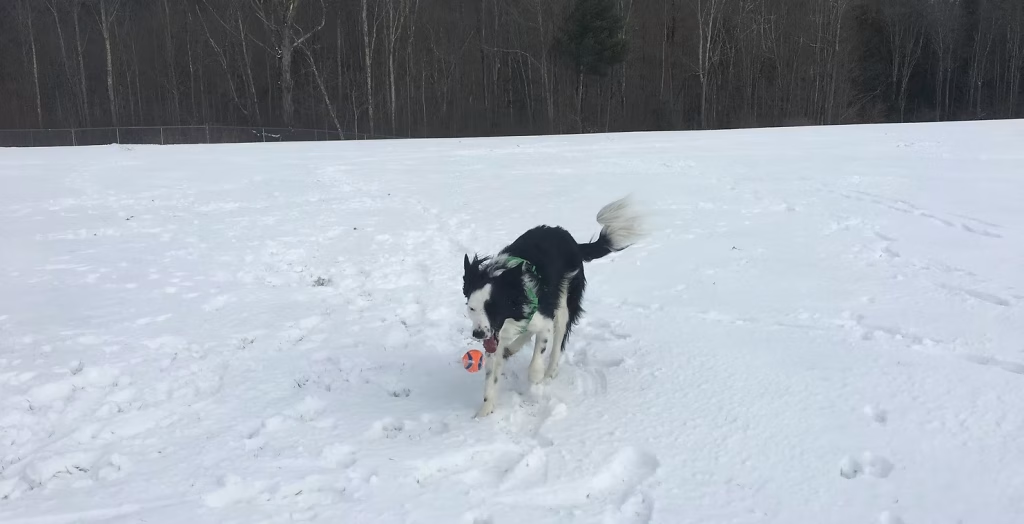
Owen
Dock Diving
“Owen now has four very functional legs, allowing him to excel in dock diving. More importantly, though, Owen is a happy young man who can roughhouse with his brother, go on runs with my wife, and play fetch at the park like nobody’s business.”
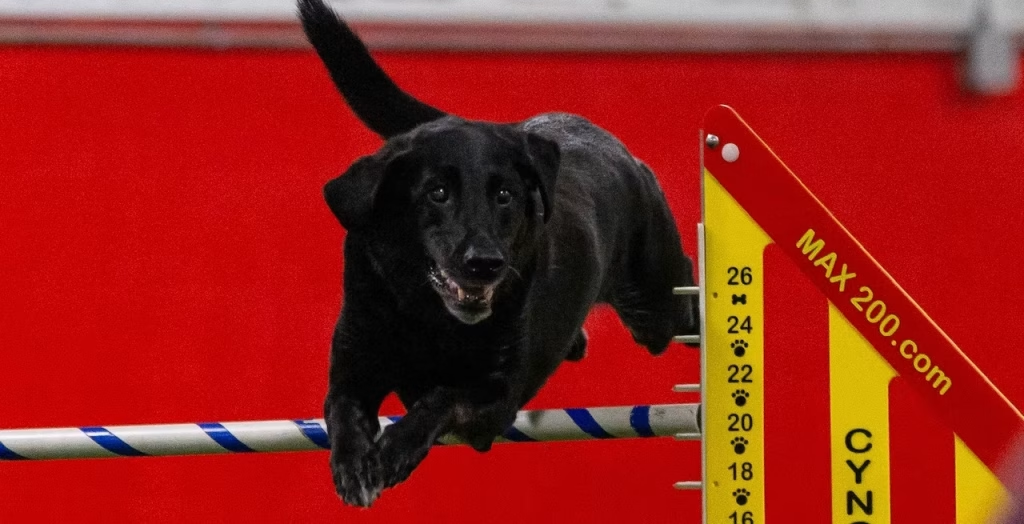
Lexie
Agility
“The surgeries were successful and Lexie came back to the agility ring as fast as ever. She was the fastest dog in the country (of any breed) competing in 20” preferred in AKC Agility in 2016.”
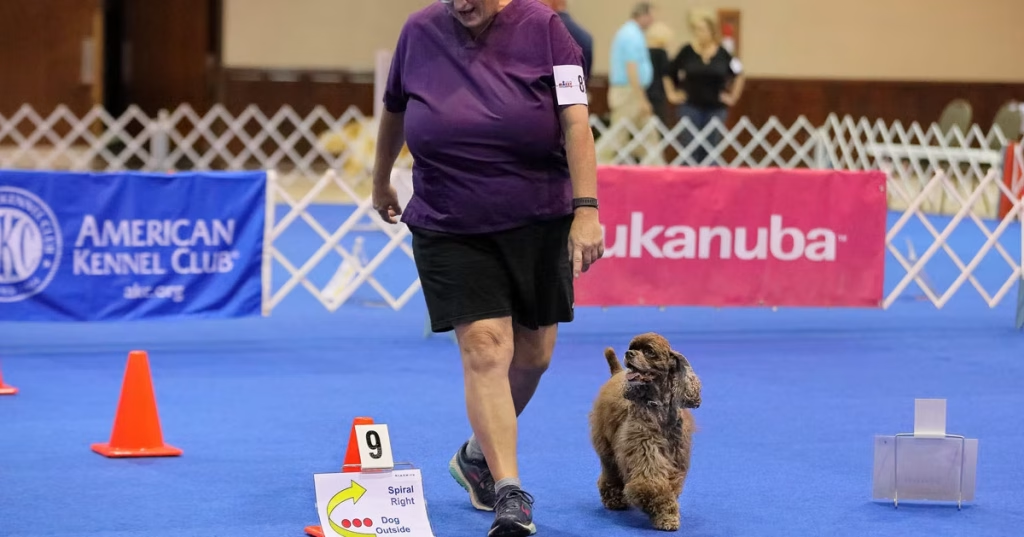
Chelsie
Agility
“Chelsie tore the subscapularis tendon in her left shoulder and had it surgically repaired by Dr. Canapp in February 2016. She returned to showing in Rally in June 2016 and went on to win the rally competition at the Cocker Spaniel national specialty in July and also compete in the agility competition there. In 2019, Chelsie was ranked 16th all-breed in AKC Rally and 8th for Cocker spaniels in AKC Preferred Agility.”
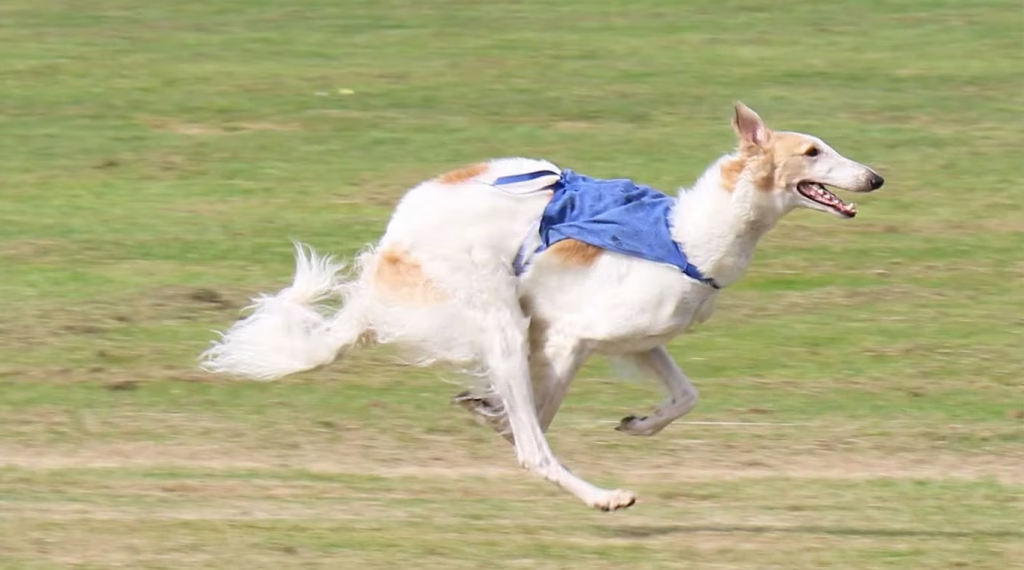
Vail
Lure Coursing
“Vail spend 6 weeks in a SPICA splint and then another 2 weeks in a soft splint. Afterwards, Vail went through several weeks of rehab which included gym work, underwater treadmill, and pool therapy. Shortly after her 2nd birthday, she was out on the lure coursing field competing!”