
TPLO Specialists for the San Francisco Bay Area
The Sams Clinic specializes in diagnosing and treating cranial cruciate ligament (CCL) disease, including TPLO surgery and individualized treatment approaches, for dogs throughout the San Francisco Bay Area.
TPLO Surgery Expertise
The Sams Clinic specialists have performed thousands of TPLO procedures and designed TPLO implant systems widely used by veterinary surgeons.

TPLO Experience
Performed thousands of TPLO surgeries across routine, complex, revision, and second-opinion cranial cruciate ligament cases.

TPLO Innovation
Designed TPLO plates and implant systems widely used by veterinary surgeons performing TPLO surgery.

CCL Expertise
Decades of clinical practice, research, innovation, and veterinary education advancing the diagnosis and treatment of canine cranial cruciate ligament disease.
Complete CCL Care

While TPLO is often the appropriate treatment for CCL disease, it is not automatically necessary. More precise diagnostic evaluation can reveal whether other treatments, including nonsurgical care, may be appropriate.
Precise CCL Diagnosis
Our specialists use advanced diagnostics to visualize CCL injuries, determine their severity, and define the appropriate treatment for each individual patient:
- Musculoskeletal Ultrasound: Real-time visualization of the CCL and surrounding tissues to determine the location and extent of injury.
- Arthroscopy: Direct visualization inside the joint to assess the CCL, meniscus, cartilage, and other structures.
- Gait Analysis: Objective measurement of weight-bearing and limb function to quantify how the injury affects movement.
- X-ray & CT Imaging: Detailed imaging of bones and joint structure to identify related changes and guide treatment planning.
Not every diagnostic method is needed for every patient; evaluation is tailored around the individual patient.
Individualized Treatment Options
Not every CCL diagnosis automatically requires TPLO surgery. Treatment options are selected based on each patient's specific injury and recovery goals, and may include:
- Arthroscopic Treatment: Uses a small camera and instruments inside the joint to diagnose and potentially treat meniscal and other joint injuries.
- Orthobiologic Therapy: Uses the patient’s own tissues to support healing and recovery, with therapies including platelet-rich plasma (PRP), bone marrow-derived treatments, and cellular therapies.
- Nonsurgical Treatment: Rehabilitation, activity modification, and other therapies for patients whose injuries can be treated without surgery.
- TPLO Surgery: Changes the biomechanics of the knee to provide stability during weight-bearing without replacing or relying on the injured CCL.
- Other Surgical Treatment: Alternative surgical approaches may be considered when TPLO is not the most appropriate option for an individual patient.
Treatments may be used individually or combined based on what is appropriate for each patient.
Personalized Recovery
Recovery from CCL treatment is not one-size-fits-all. The injury, treatment, and recovery goals shape each dog’s rehabilitation and return-to-activity plan.
- Everyday Mobility: Restoring comfortable movement for walking, stairs, play, and daily life.
- Active Lifestyles: Progressive return to hiking, running, recreation, and other higher-demand activities.
- Sport & Work: Structured rehabilitation and return to the specific physical demands of canine sport, competition, or work.
Recovery is evaluated throughout the process so activity can progress based on each dog’s healing and function.
Understanding Cranial Cruciate Ligament (CCL) Disease & TPLO Surgery
Cranial cruciate ligament disease can range from partial ligament damage to complete rupture and may involve knee instability, meniscal injury, osteoarthritis, and other joint changes.
Cranial Cruciate Ligament Disease in Dogs
Cranial cruciate ligament disease is one of the most common causes of hind-leg lameness and knee instability in dogs. The cranial cruciate ligament (CCL), often called a dog’s ACL, helps stabilize the stifle joint during weight-bearing and movement.
Cranial cruciate ligament disease may involve:
- Partial CCL tearing: Damage involving part of the ligament that may cause intermittent limping, stiffness, reduced weight-bearing, or difficulty rising, jumping, or using stairs.
- Complete cranial cruciate ligament rupture: Loss of functional knee stability, often producing more pronounced lameness and abnormal movement within the joint.
- Meniscal injury: Damage to the fibrocartilage structures within the knee, which may occur with cruciate instability and contribute to persistent pain or a sudden worsening of lameness.
- Osteoarthritis: Progressive joint inflammation and degeneration associated with instability, cartilage damage, and altered knee mechanics.
Unlike many traumatic ACL injuries in people, a CCL tear in dogs often develops through gradual ligament degeneration rather than one identifiable event. A dog may become lame suddenly even though the ligament has been weakening over time. Acute traumatic rupture can also occur.
Cranial cruciate ligament disease can affect dogs of any breed, size, age, or activity level, but some dogs are at greater risk. Breed and genetics, knee and limb conformation, excess weight, and age-related ligament degeneration may all contribute. Certain breeds, including many large and giant breeds, are predisposed, although CCL disease also occurs in small dogs. Dogs with disease in one knee may later develop it in the opposite knee.
TPLO surgery is commonly recommended for appropriate patients, but not every dog with a torn ACL or CCL requires the same treatment approach.
Signs & Diagnosis of a Cranial Cruciate Ligament Injury
Dogs with cranial cruciate ligament disease may develop lameness gradually or suddenly. Some continue to bear weight on the affected leg, while others may hold the leg completely off the ground. Because symptoms vary with the degree of ligament injury and associated meniscal damage, early orthopedic evaluation is important even when limping appears mild or intermittent.
Common signs may include:
- Hind-leg limping: Persistent or intermittent lameness that may worsen after activity or exercise.
- Difficulty rising or jumping: Reluctance to climb stairs, jump into vehicles, or stand after resting.
- Reduced activity: Decreased willingness to run, play, exercise, or participate in normal daily activities.
- Toe-touching or non-weight-bearing lameness: More significant instability may cause dogs to partially or completely avoid using the affected leg.
- Progressive muscle loss: Reduced use of the limb may result in gradual loss of thigh muscle mass over time.
Diagnosis begins with an orthopedic examination assessing joint stability, pain, range of motion, muscle condition, and gait. Cranial drawer and tibial thrust testing evaluate abnormal movement associated with CCL instability and may sometimes be performed with sedation to allow more accurate assessment. Radiographs help identify joint effusion, osteoarthritis, bone changes, and other causes of hind-limb lameness.
Partial tears and associated joint injuries can require additional evaluation. Musculoskeletal ultrasound can directly visualize the CCL and surrounding tissues, while arthroscopy provides direct visualization inside the joint. Gait analysis can objectively measure weight-bearing and limb function, while CT provides detailed imaging of bone and joint structure when additional structural information is needed.
No single finding determines the most appropriate treatment. Treatment recommendations are based on the complete orthopedic evaluation together with your dog's size, anatomy, activity level, degree of instability, and overall health.
CCL Treatment Options & When TPLO Is Recommended
Treatment for cranial cruciate ligament disease is selected according to the degree of knee instability, meniscal or joint disease, the dog’s size and anatomy, age, activity level, overall health, and long-term functional needs. The primary decision is whether surgical stabilization or nonsurgical management offers the most appropriate path for the individual patient.
Treatment options may include:
- TPLO surgery: Tibial plateau leveling osteotomy (TPLO) changes the mechanics of the knee to provide functional stability during weight-bearing without replacing the damaged CCL. TPLO is especially common for active dogs, dogs with substantial knee instability, and medium- and large-breed dogs, although it can be appropriate for dogs across a wide range of sizes and activity levels.
- Other surgical treatment: Alternative surgical approaches may be considered when TPLO is not the most appropriate option for an individual patient.
- Nonsurgical management: Activity modification, weight management, medication, rehabilitation, and other supportive treatment may be appropriate for selected dogs or used when surgery is not recommended.
- Orthobiologic therapy: Platelet-rich plasma (PRP), bone marrow-derived therapies, and other biologic treatments may be incorporated into selected CCL treatment plans to support healing and recovery.
- Combined treatment: Rehabilitation, meniscal treatment, osteoarthritis management, and other therapies may be incorporated before, during, or after surgical stabilization according to the complete orthopedic condition.
TPLO is often recommended because it provides dynamic stability without replacing the damaged cranial cruciate ligament. The procedure may be appropriate for dogs across a range of sizes and activity levels; it is not limited to large or athletic dogs.
The Sams Clinic evaluates the entire cruciate case before recommending treatment. TPLO is selected when it offers the most appropriate combination of knee stability, recovery, and long-term function—not simply because a cranial cruciate ligament tear is present.
How TPLO Surgery Works
TPLO stands for tibial plateau leveling osteotomy. Rather than replacing the damaged cranial cruciate ligament, TPLO changes the angle of the upper tibia to reduce abnormal forward movement within the knee during weight-bearing.
The procedure generally involves:
- Preoperative planning: Radiographs are used to evaluate the knee, measure the tibial plateau angle, and plan the osteotomy and implant placement for the individual patient.
- Tibial osteotomy: A curved cut is made in the upper tibia so the tibial plateau can be rotated to the planned position.
- Plate and screw fixation: A TPLO plate and screws stabilize the repositioned bone while the osteotomy heals.
- Joint and meniscal evaluation: The knee is assessed for meniscal injury, cartilage damage, inflammation, and other intra-articular disease. Arthroscopy may be incorporated when appropriate to visualize and treat structures within the joint.
- Postoperative assessment: Radiographs document alignment and implant position after surgery, while follow-up examinations and imaging monitor osteotomy healing and recovery.
By changing the biomechanics of the knee, TPLO can provide functional stability during standing, walking, running, and other weight-bearing activity. The osteotomy must then heal while strength, limb use, and movement are progressively restored.
Procedure planning is individualized according to the dog’s anatomy, tibial plateau angle, degree of instability, meniscal and joint findings, activity level, and long-term functional goals.
TPLO Recovery & Rehabilitation
Recovery after TPLO surgery depends on osteotomy healing, appropriate activity restriction, progressive rehabilitation, and a carefully managed return to activity. Recovery timelines vary according to the dog's age, overall health, orthopedic condition, and individual healing response.
Recovery typically includes:
- Activity restriction: Controlled activity during the early stages of bone healing while the osteotomy stabilizes.
- Follow-up evaluation: Recheck examinations and radiographs to monitor osteotomy healing, implant position, limb use, and recovery progress.
- Progressive rehabilitation: Therapeutic exercise, strength development, mobility training, and other rehabilitation techniques to restore comfortable limb function.
- Return to activity: Gradual progression back to walking, hiking, play, sport, work, or other normal activities based on functional recovery rather than time alone.
- Long-term joint health: Ongoing management of strength, body weight, osteoarthritis, and overall orthopedic health to support long-term comfort and mobility.
Every dog heals differently. Recovery recommendations are individualized according to physical examination findings, radiographic healing, functional progress, and each dog's activity goals. Dogs recovering more slowly than expected or continuing to show lameness may benefit from additional orthopedic evaluation to identify factors affecting recovery.
With appropriate treatment, rehabilitation, and long-term management, many dogs return to comfortable family activities, athletic performance, working roles, and other physically active lifestyles.
When to See a Specialist About CCL Disease & TPLO
A specialist evaluation is appropriate when your dog has suspected or confirmed cranial cruciate ligament (CCL) disease—often described as a torn ACL in dogs—and you need clarity about the most appropriate path forward.
Consider consultation when your dog has:
- Persistent, recurring, or worsening hind-leg lameness, stiffness, reduced weight-bearing, or difficulty rising, jumping, using stairs, running, or playing.
- A suspected partial or complete CCL tear, knee instability, meniscal injury, or progressive arthritis.
- An active lifestyle, demanding work, or performance goals that make long-term soundness and return to activity especially important.
- Uncertainty about treatment, including whether TPLO surgery, another stabilization procedure, rehabilitation, orthobiologic treatment, or nonsurgical management is most appropriate.
- A prior cruciate diagnosis or treatment that has not restored comfortable, reliable limb use.
- A complex case, prior surgery, revision concern, or need for a second opinion.
A specialist consultation does not assume that every dog needs TPLO surgery. The Sams Clinic evaluates each dog’s anatomy, degree of instability, joint and meniscal findings, overall health, activity demands, and long-term functional goals before recommending a treatment plan.
The Sams Clinic Approach
Dr. Andrew Sams founded The Sams Clinic on a simple belief: advanced medicine and kindness belong together. This belief shapes how we care for pets and the families who love them.

Advanced Diagnostics & Procedures
As a full-spectrum orthopedic and sports medicine center, The Sams Clinic brings advanced diagnosis, treatment, and recovery planning together in one coordinated experience.

Personalized Support & Coordination
Complex orthopedic care is easier to navigate with a team that stays close to the case, coordinates the details, and supports you through consultation, treatment, and recovery.

Long-Term Partners in Care
Questions don’t always end when treatment does. Whether weeks, months, or years later, you’ll have a team that knows your pet, your goals, and your pet’s orthopedic history.
Our Specialists

Andrew Sams, DVM, MS, DACVS
Founder & Medical Director
Orthopedic Surgery & Arthroscopy

Sherman Canapp, DVM, MS, CCRT, DACVS, DACVSMR
Orthopedic Surgery & Arthroscopy
Sports Medicine & Rehabilitation

Dana Whitlock, DVM, MS, CCRP, CVA, DACVSMR
Sports Medicine & Rehabilitation
TPLO Innovation & Veterinary Orthopedic Leadership
For decades, our specialists have advanced the standards, techniques, and technologies shaping modern veterinary orthopedics, arthroscopy, orthobiologics, and sports medicine—including the development of TPLO implant systems.
- TPLO technology development including low-profile, limited-contact, locking, pre-contoured TPLO plates and related implant systems used by veterinary surgeons.
- Clinical research programs spanning musculoskeletal disease, soft tissue injury, orthobiologic therapy, functional recovery, and objective outcomes assessment.
- Scholarly contributions including peer-reviewed publications, textbook chapters, and scientific presentations.
- Technology development & validation across orthobiologic systems, minimally invasive systems, musculoskeletal ultrasound applications, surgical instrumentation, specialty-care platforms, and related areas.
- Clinical method development spanning arthroscopy, minimally invasive diagnosis and treatment, sports medicine, and functional recovery.
- Veterinary education including national and international lecturing, training academies, advanced procedural laboratories, and residency, internship, and fellowship training.
- Field-building leadership including development of professional organizations, national specialty programs, specialty practices, and clinical service lines.

Our Location
489 Miller Avenue
Mill Valley, CA 94941
Patient Stories
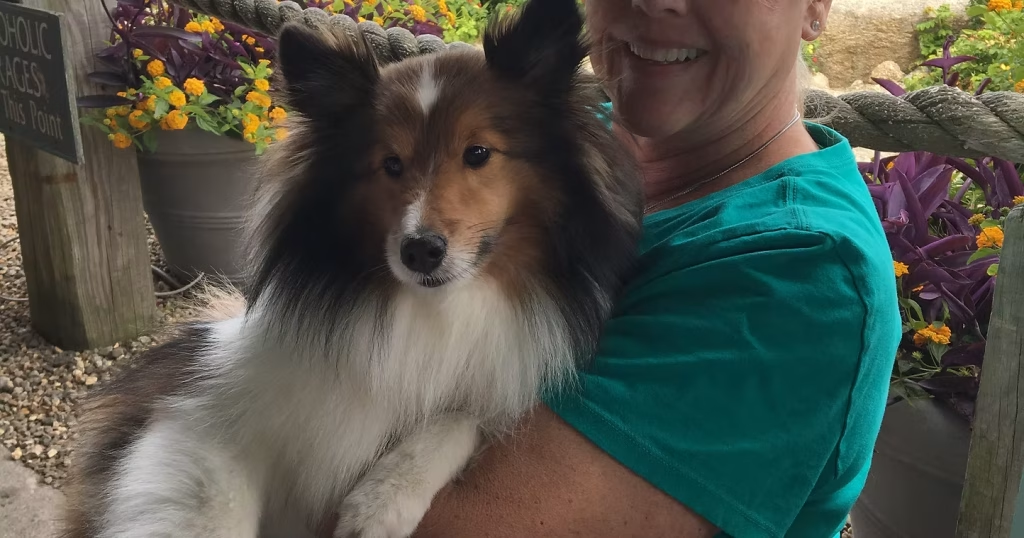
Zar’n
Agility
“The team, as well as Dr. Canapp, was very helpful in explaining everything that was done and even provided video of the entire procedure. Zar’n was almost 6 years old with a promising career in agility ahead of him.”
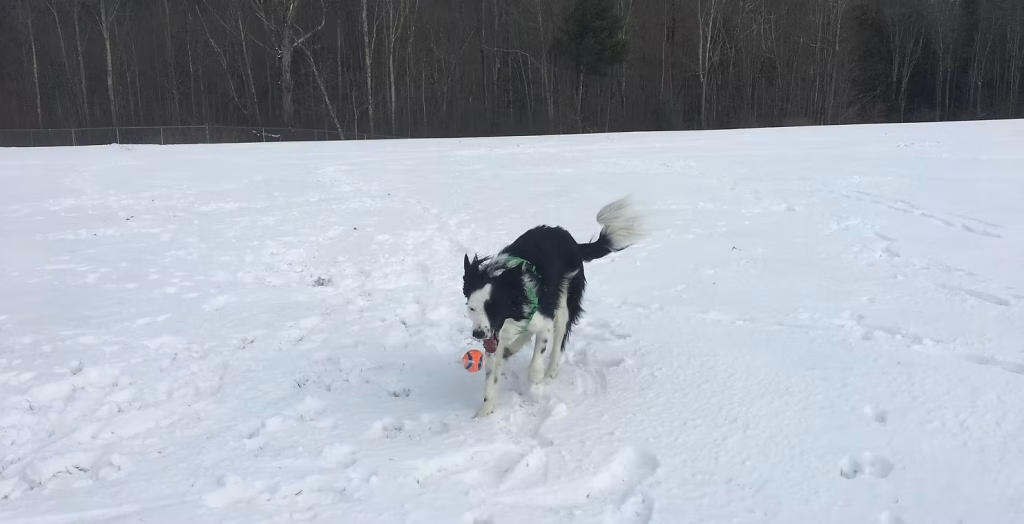
Owen
Dock Diving
“Owen now has four very functional legs, allowing him to excel in dock diving. More importantly, though, Owen is a happy young man who can roughhouse with his brother, go on runs with my wife, and play fetch at the park like nobody’s business.”
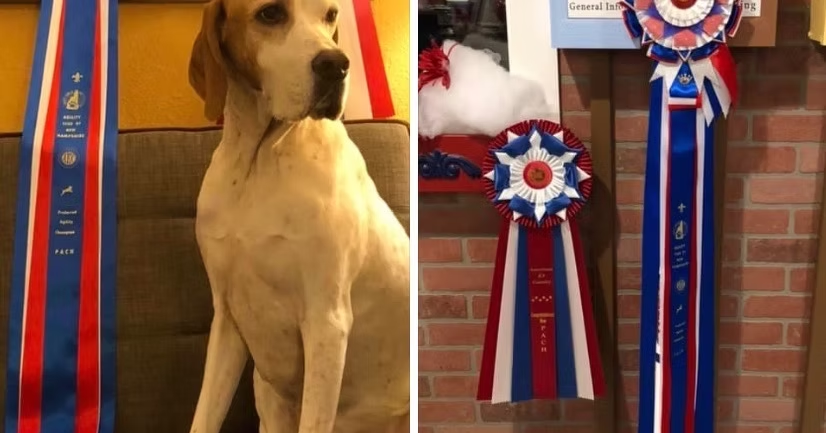
Deena
Agility
“I was unsure whether she’d get back to competition fitness. After six months off, followed by extensive rehabilitation and continuing weekly fitness sessions, she adds her Preferred Agility Championship to her four MACHs, and she is now CH MACH4 PACH Black Alder Denali JH T2B4 MF MXG2 MXJP2 MXP3 MJP3!”
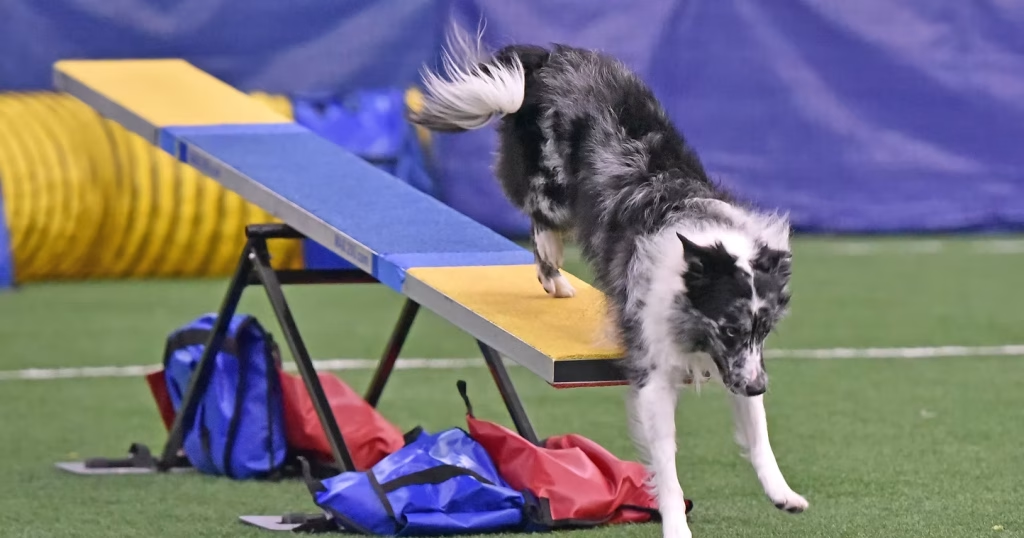
Shazam
Agility
“While a definitive diagnosis took a bit of time, Dr. Canapp did get to the underlying cause, and both of Shazam’s wrists were treated. This treatment, along with a rehabilitation program, resolved his lameness, and Shazam and I had an extremely rigorous and successful competitive agility career for many years.”