
Pioneers in Canine Sports Medicine
From pioneering minimally invasive methods and leading translational human-veterinary care to leadership in the American College of Veterinary Sports Medicine and Rehabilitation, The Sams Clinic team has shaped the science, practice, and education of veterinary sports medicine.
Care Designed For Performance
For dogs trained for precision, power, and control — where every stride, turn, and hesitation matters — The Sams Clinic delivers patient-specific performance medicine tailored to your dog’s condition, capabilities, and performance demands.

Common Performance-Limiting Conditions
The Sams Clinic provides comprehensive musculoskeletal diagnosis and treatment for canine athletes, working dogs, and highly active companions, from acute injury and lameness to recurrent, unresolved, or complex performance-limiting conditions.
Common reasons for evaluation include:
- Shoulder instability, biceps disease, supraspinatus injury, iliopsoas injury, tendon, ligament, and muscle injury
- Cranial cruciate ligament disease, meniscal injury, intra-articular inflammation, cartilage injury, joint instability, and osteoarthritis
- Carpal, tarsal, digit, and load-bearing injuries associated with jumping, turning, braking, impact, and repetitive work
- Lumbosacral, pelvic, compensatory, and load-bearing pain patterns affecting movement, power, or performance
- Reduced speed, power, endurance, confidence, precision, stride and movement quality, or task performance
- Persistent lameness, recurrent injury, delayed recovery, or failure to return to previous performance
- Complex, unresolved, or previously treated cases requiring advanced orthopedic and sports medicine evaluation
Precision Evaluation & Diagnostic Localization
Evaluation is individualized to your dog’s condition, history, and performance demands to identify the anatomic, pathologic, and biomechanical factors responsible for pain, instability, dysfunction, or performance limitation.
- Objective quantitative gait analysis to detect subtle abnormalities
- Musculoskeletal ultrasound for dynamic evaluation of tendons, ligaments, muscles, joints, and other soft tissues
- Arthroscopic and needle-scope evaluation of intra-articular disease
- Review of prior imaging, treatment, rehabilitation, and performance history
- CT and other advanced imaging when indicated
- Interpretation in the context of sport, work, workload, conditioning, and performance demands
Performance-Focused Treatment
Treatment recommendations are specific to your dog’s diagnosis, clinical condition, and performance requirements, with the goal of restoring durable function through the least invasive medically appropriate path back to safe performance.
Treatment may include:
- Arthroscopic and other minimally invasive treatments
- Ultrasound-guided therapeutic procedures
- Platelet-rich plasma (PRP), bone marrow aspirate concentrate (BMAC), adipose-derived cellular therapy, and other orthobiologic treatments
- Performance-focused rehabilitation, conditioning, and therapeutic exercise
- Orthopedic repair, reconstruction, and stabilization when indicated
- Coordinated expertise in surgery, sports medicine, rehabilitation, and regenerative medicine
Return to Performance & Work
Return-to-performance planning is specific to your dog’s recovery, functional readiness, and the physical demands your dog must safely resume in sport, work, service, hunting, or active life.
Planning may include:
- Objective assessment of movement quality, biomechanics, and functional recovery
- Performance-readiness evaluation based on the demands of your dog’s specific sport, work, or activity
- Graduated return-to-sport, return-to-work, and return-to-duty progression
- Strength, conditioning, workload progression, and performance capacity development
- Sport-, work-, and task-specific performance planning
- Long-term performance preservation and reinjury risk reduction
Long-Term Performance Support
Performance care does not end after treatment, because the demands of sport, work, service, and duty continue as your dog returns to activity and performance evolves over time.
Long-term support with The Sams Clinic may include:
- Early evaluation of new, recurrent, or compensatory concerns
- Performance monitoring over time
- Performance preservation and injury-risk assessment
- Management of chronic orthopedic or mobility-limiting conditions
- Guidance as training, competition, duty, workload, age, or career demands change
Specialists Who Shaped the Field
The Sams Clinic’s specialists helped pioneer, validate, teach, and advance many of the methods and technologies that define modern veterinary sports medicine.
- Pioneering canine arthroscopy, needle-scope technology, and minimally invasive orthopedic techniques
- Advancing diagnostic musculoskeletal ultrasound and precision localization in veterinary sports medicine
- Developing and validating orthobiologic and regenerative treatment applications
- Translating human orthopedic, sports medicine, rehabilitation, and performance science into veterinary practice
- Advancing the profession through foundational research, publications, and education
- Training surgeons, sports medicine specialists, and rehabilitation veterinarians through specialty colleges, procedural laboratories, and international education
Performance Medicine Innovation & Leadership
For decades, our specialists have advanced the standards, techniques, and technologies shaping modern veterinary orthopedics and sports medicine.

Performance Medicine Clinical Research
- Musculoskeletal Injury Research. Clinical studies of iliopsoas strains in agility dogs, supraspinatus tendinopathy, medial shoulder instability, “Jump Down Syndrome,” and Achilles, carpal, sciatic, and cruciate pathology relevant to canine athletes.
- Athletic Biomechanics & Injury Risk. Research on muscle performance and fatigue, tendon loading, joint motion, breed-specific gait, concurrent injuries, and competition-surface effects on injury and performance.
- Objective Gait & Functional Assessment. Evaluation of stance analysis, pressure-sensitive walkways, joint range of motion, force-plate analysis, and other objective measures of lameness and musculoskeletal function.
- Treatment & Functional Outcomes. Prospective, controlled, and retrospective studies of orthopedic procedures, rehabilitation, minimally invasive treatments, regenerative therapies, braces, and prosthetics—including return to competitive agility after cruciate surgery.
- Cartilage & Joint-Preservation Research. Research in orthopedic biomechanics, cartilage repair, collagen scaffolds, osteoarthritis treatment, and joint-preserving therapies underlying modern performance medicine.
Minimally Invasive Diagnosis & Treatment Innovation
- Musculoskeletal Ultrasound. Studies and clinical applications involving iliopsoas, supraspinatus, Achilles, carpal, sciatic, shoulder, and cruciate pathology—including cruciate injury without joint instability and comparisons with MRI and arthroscopy.
- Arthroscopy & Needle-Scope Procedures. Early advancement of small-animal arthroscopy followed by development and evaluation of needle-scope technology for shoulder, elbow, and stifle conditions.
- Image-Guided Procedures. Use of musculoskeletal ultrasound to localize pathology, guide tendon, ligament, and joint procedures, and evaluate tissue response during recovery.
- Joint-Preserving Surgical Techniques. Development and clinical evaluation of minimally invasive procedures, including prosthetic ligament stabilization for medial shoulder instability.
- Canine-Specific Procedural Technology. Development of systems and instruments designed for canine arthroscopic and needle-scope procedures.
Regenerative & Orthobiologic Advancement
- Early Canine Stem-Cell Research. Early clinical trials of adipose-derived stem and regenerative cells for canine hip and elbow osteoarthritis, including randomized, blinded, controlled investigation.
- PRP, Stem Cell & Bone Marrow Concentrate Research. Validation and clinical study of platelet-rich plasma, adipose-derived stem and progenitor cells, stromal vascular fraction, and bone marrow aspirate concentrate for canine musculoskeletal conditions.
- Tendon & Ligament Applications. Studies of stem-cell, PRP, and bone-marrow-concentrate therapies for supraspinatus tendinopathy and partial cranial cruciate injury, with additional investigations of carpal and caudal cruciate injuries in sport and working dogs.
- Joint Preservation & Osteoarthritis Treatment. Research involving stem cells, PRP, hyaluronic acid, IRAP, collagen bioscaffolds, and other intra-articular therapies for elbow, hip, and degenerative joint disease.
- Orthobiologic Characterization & Validation. Analysis of canine PRP and bone marrow concentrate systems through prospective validation and multicenter comparison, including evidence that a tested product did not concentrate canine platelets.
- Translational Product Development. Adaptation and investigation of canine-specific PRP and bone marrow concentrate systems, hyaluronic acid products, biologic scaffolds, and injectable joint technologies with physicians, biomedical engineers, universities, and technology developers.
Rehabilitation & Return-to-Performance Innovation
- Integrated Sports Rehabilitation. Development, study, and teaching of rehabilitation for shoulder, elbow, stifle, cruciate, tendon, and other musculoskeletal injuries, with programs structured around canine athletic demands.
- Objective Recovery Assessment. Use of gait and stance analysis, pressure-sensitive walkways, joint range of motion, force measurement, and musculoskeletal ultrasound to assess function and monitor recovery.
- Return to Sport & Functional Progression. Research on return to competitive agility after cruciate surgery and clinical programs focused on restoring the function required for each dog’s sport, work, or training.
- Rehabilitation Technologies. Research, clinical evaluation, and integration of shockwave therapy, low-intensity pulsed ultrasound, electromagnetic and thermal treatments, localized vibration, massage therapy, and acupuncture.
- Orthoses & Prosthetics. Clinical studies of functional stifle braces, external limb prostheses, self-suspension prosthetics, splints, and other orthopedic support devices.
- Injury Prevention & Athletic Maintenance. Research and education addressing competition surfaces, conditioning, muscle and joint function, early injury identification, and ongoing management of sport and working dogs.
Veterinary Sports Medicine Leadership
- Foundational Orthopedic & Arthroscopic Leadership. Early advancement and international teaching of small-animal arthroscopy, orthopedic biomechanics, cartilage and joint preservation, and minimally invasive care before veterinary sports medicine became a recognized specialty.
- Specialty Formation & Program Development. Leadership as a charter diplomate and past president of the American College of Veterinary Sports Medicine and Rehabilitation; founding president of the American Association of Rehabilitation Veterinarians; co-founder of the first U.S. hospital dedicated to veterinary orthopedics and sports medicine; and founding national director of integrated sports medicine, rehabilitation, and regenerative medicine programs.
- Veterinary Education & Specialist Training. Decades of lectures, workshops, wet labs, certification programs, specialist training, and mentorship spanning sports medicine examination, musculoskeletal ultrasound, arthroscopy, needle-scope procedures, orthobiologics, rehabilitation, and gait assessment.
- Scientific Publications & Clinical References. Peer-reviewed research, textbook chapters, clinical references, and professional education addressing canine sports injuries, biomechanics, orthopedics, diagnostic imaging, rehabilitation, regenerative medicine, and return to function.
- Translational & Technology Collaboration. Work with human sports physicians, biomedical engineers, universities, and technology developers on veterinary instruments, imaging systems, implants, orthobiologics, rehabilitation technologies, and remote procedural support.
- International & Working-Dog Education. Global training, consultation, and procedural support for veterinary teams, performance-dog communities, police and government K-9 programs, handlers, and trainers.

Owners, Trainers, & Handlers
You know your dog’s ‘normal’ better than anyone else. You recognize the subtle changes that matter most: the missed contact, the wider turn, the hesitation. We approach performance care the same way you care for your dog: as teammates and partners.

Teams, Programs & Events
The Sams Clinic works with organizations responsible for dogs trained for sport, work, service, and duty. We provide program-level advisory, educational, and clinical support, including veterinary coverage for competitions, field events, trainings, and working-dog activities.
Trusted by Performance Dog Owners, Handlers & Programs Worldwide
For performance and working dogs, medical decisions are often performance decisions. The Sams Clinic provides the orthopedic, performance, and recovery care required at the highest levels of training, competition, and duty.

Virtual Consultations *
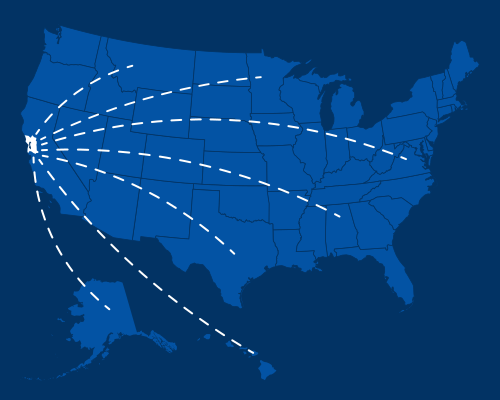
For certain cases originating beyond the San Francisco Bay Area, our specialists are available for virtual case review and planning.

Performance-Focused Treatment Planning
Care is shaped around your dog’s unique capabilities and performance demands, with the goal of maximizing function while minimizing downtime.

Travel & Visit Support
Many of our patients travel long distances for care, and our team is accustomed to helping make those visits as smooth and productive as possible.
Travel & Stay
Traveling to Mill Valley
The Sams Clinic is located 10 miles north of San Francisco, accessible by:
- Highway 101 and the Golden Gate Bridge
- San Francisco International Airport (SFO), Oakland International Airport (OAK), or Sonoma County Airport (STS)
- Rideshare and regional transit
Planning Your Stay
Pet owners traveling to The Sams Clinic often stay in Mill Valley, San Francisco, Sausalito, San Rafael, or nearby Marin communities depending on visit length and recovery needs. Hotels, extended-stay accommodations, and pet-friendly short-term rentals are widely available throughout the area.
Many traveling families use their visit as an opportunity to explore the Bay Area while their pet receives care. Mill Valley and Marin County offer access to Northern California destinations including Muir Woods, Mount Tamalpais, coastal trails, wine country, and San Francisco.
Patient Stories
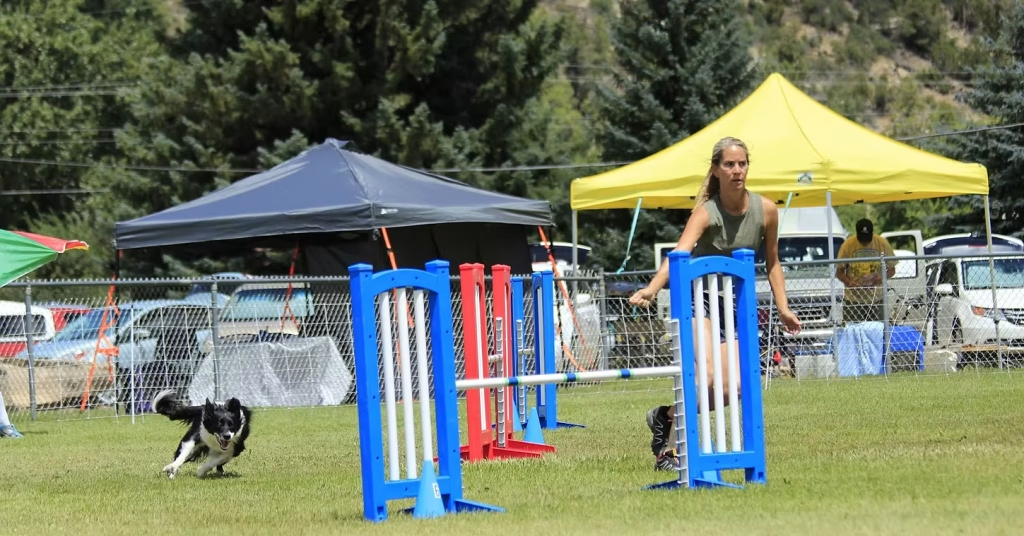
Squid
Agility
“My dog, Squid Vicious, was diagnosed and treated for bilateral iliopsoas strains and underwent stem cell and platelet-rich plasma (PRP) treatment. After a long recovery of rest and rehabilitation, Squid made a full recovery and has gone on to have a very successful career in agility.”
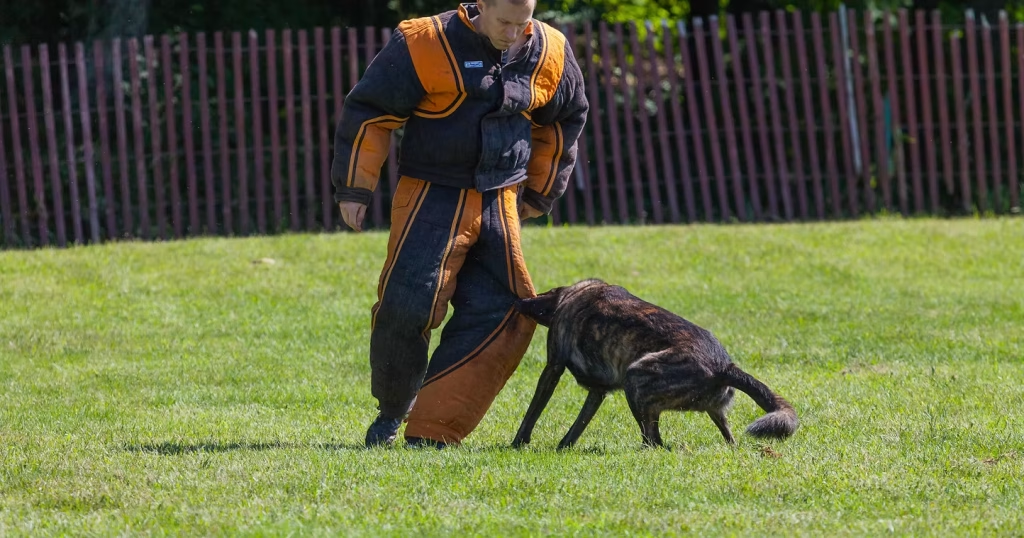
Maicoh
Protection & French Ring
“Kraken is back doing all the things a healthy 5-year-old Border Collie should be doing. He loves sheep herding, agility, swimming, hiking, playing with his two Dutch Shepherd brothers and ruling our house. Maicoh has retired from French Ring and enjoys dock diving in his own dock-dog pool in our yard, hiking and trying to keep Kraken—and Maicoh’s son, Lycan—in line.’
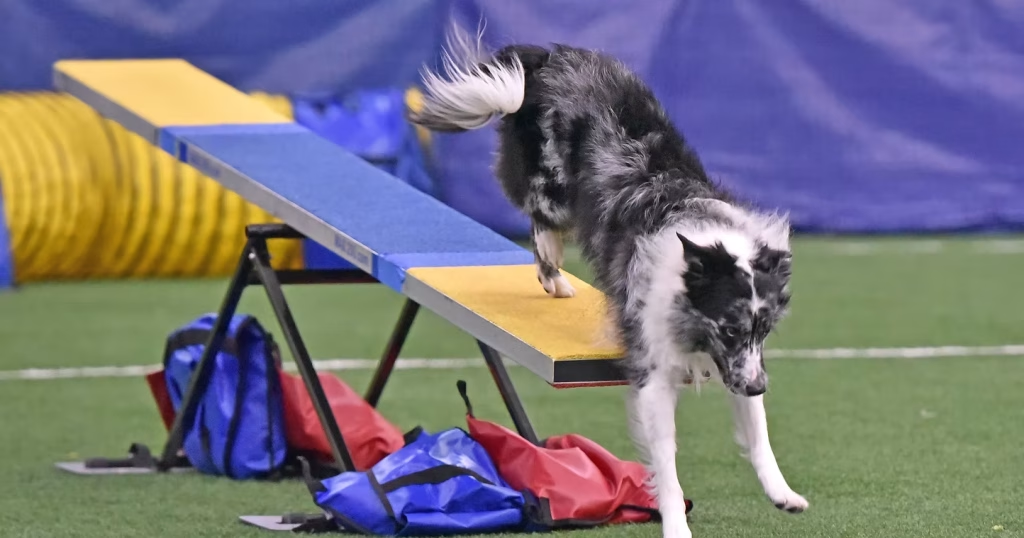
Shazam
Agility
“While a definitive diagnosis took a bit of time, Dr. Canapp did get to the underlying cause, and both of Shazam’s wrists were treated. This treatment, along with a rehabilitation program, resolved his lameness, and Shazam and I had an extremely rigorous and successful competitive agility career for many years.”
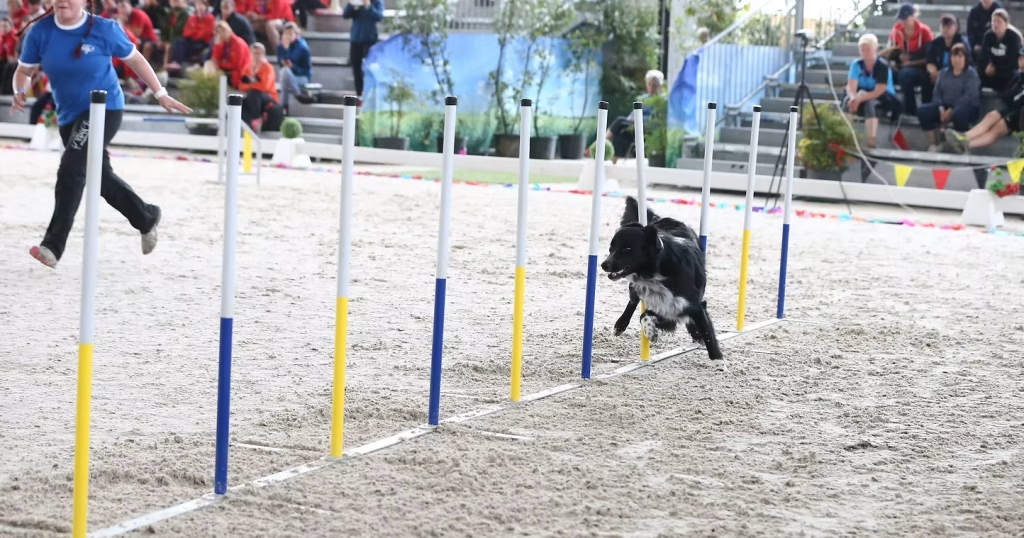
Bang
Agility
“after considering and some research I decided on most experience and also the possibility for radiofrequency ablation (RF). RF isn’t offered anywhere in Finland yet, so even with some quite skillful vets in Finland too, I wanted to get the best possible treatment for Bang. Sherman was really helpful in this decision making process, he gave me time to think about it, showed me research on shoulder issues and videos of the scopes and how RF works and answered with patience all the many questions I had.”